Brimer v. A.T. Cross Company

Date: 
October 7, 2011

On October 7, 2011, the Alameda County Superior Court entered a Consent Judgment in Brimer v. A.T. Cross Company, which resolved citizen enforcer Russell Brimer's allegations that the defendant A.T. Cross Company ("A.T. Cross") sold books and journals containing the heavy metal lead in the State of California without providing the requisite health hazard warnings.

Plaintiff: 
Brimer
Defendant: 
A.T. Cross Company
Type: 
Consent Judgment
Relief: 
Reformulation
Monetary: 
$60,000 - $69,999
Monetary Relief: 
Civil Penalties
Used By: 
Adults
Cross-Post On: 
None

Brimer v. Acme United Corporation

Date: 
February 1, 2011

On February 1, 2011, citizen enforcer Russell Brimer and settling defendant Acme United Corporation ("Acme") entered into an out-of-court Settlement Agreement, which resolved Brimer's allegations that Acme sold vinyl accessory pouches containing the heavy metal lead in the State of California without providing the requisite health hazard warnings.

Plaintiff: 
Brimer
Defendant: 
Acme United Corporation
Type: 
Out-of-Court Settlement
Relief: 
Reformulation
Monetary: 
$20,000-$29,999
Monetary Relief: 
Civil Penalties
Used By: 
Children
Cross-Post On: 
None

Brimer and Moore v. Kikkerland Design, Inc.

Date: 
September 7, 2011

On September 7, 2011, citizen enforcers Russell Brimer and John Moore entered into an out-of-court Settlement Agreement with settling defendant Kikkerland Design, Inc.

Case PDF: 
Plaintiff: 
Brimer, Moore
Defendant: 
Kikkerland Design, Incorporated
Type: 
Out-of-Court Settlement
Relief: 
Reformulation
Monetary: 
$30,000 - $39,999
Monetary Relief: 
Civil Penalties
Used By: 
Adults

Held v. Aldo

Date: 
March 4, 2011
Industry Categories: 
Image: 

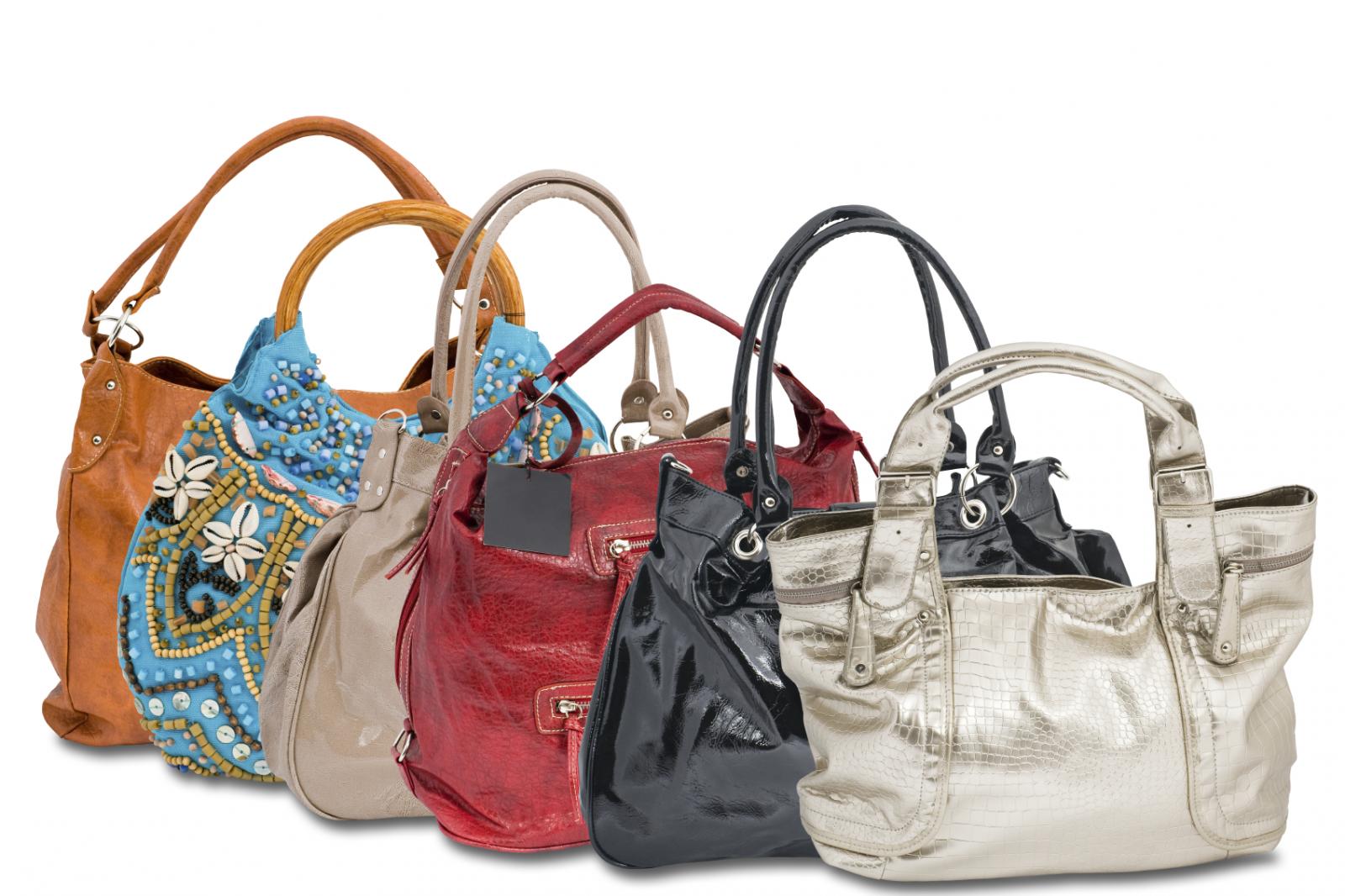
This Proposition 65 action arose from Anthony E. Held, Ph.D., P.E. and John Moore’s allegations in 2009 that certain fashion accessories containing one or more phthalate chemicals known to cause reproductive harm, specifically di(2-ethylhexyl)phthalate (“DEHP”), butyl benzyl phthalate (“BBP”), and Di-n-butyl phthalate (“DBP”), were sold to unwitting California consumers without providing the requisite Proposition 65 warnings.

Plaintiff: 
Held
Defendant: 
Aldo
Used By: 
Adults

Research Links

Section Content: 

In an effort to provide our visitors with research resources, we have compiled this list of links for your reference. Please click here to send us a resource you suggest we add to this list. 

Section Title: 
Proposition 65 Websites
Section Content: 


Office of the Attorney General Primary site for the State of California Department of Justice Office of the Attorney General
Proposition 65 List of Chemicals Information regarding the most up-date list of chemicals known to the State of California to cause cancer or reproductive toxicity.
Proposition 65 Regulations OEHHA is the lead agency for implementation of Proposition 65 and may adopt and modify regulations as necessary.
Proposition 65 Private Enforcement Regulations Regulations concerning private enforcement of Proposition 65.
OEHHA Current News Information regarding the most recent updates from OEHHA in Proposition 65 implementation.


Section Title: 
Court Links / State
Section Content: 
Superior Court of California County of Alameda Access the main page for the Superior Court of California County of Alameda.
Superior Court of California County of Marin Access the main page for the Superior Court of California County of Marin.
Superior Court of California County of San Francisco Access the main page for the Superior Court of California County of San Francisco.
Superior Court of California County of Santa Clara Access the main page for the Superior Court of California County of Santa Clara.


Renewable Energy

Section Content: 

Global energy consumption continues to increase each year and, with this increase, the demand for safe, clean, and unlimited energy is on the rise. The Federal and State governments recognize consumers' growing interest in this type of energy and take steps to promote this interest through a variety of financially-beneficial incentives.  With the understanding that renewable energy laws and regulations are constantly changing, The Chanler Group is committed to investing in its understanding and practice of this area of law.  Our understanding allows us to guide homeowners, businesses, and/or developers on the various ways to structure these projects in order to take advantage of the many benefits.

Renewable energy is generally defined as energy derived from natural resources that are replenished faster than they are consumed.  The most common sources of renewable energy include sunlight, wind, and geothermal heat (captured by solar panels, wind turbines, and geothermal heating and cooling systems, respectively).  In order to incentivize continued development of, and investment in, renewable energy projects, State and Federal authorities have implemented various programs that facilitate and subsidize these projects built by both public and private entities.

The Chanler Group is actively engaged in the review and analysis of these programs in order to determine potential benefits to our clients:

  • Obtain special use permits, rights-of-way grants, Greenfield and Brownfield permits and any other local and/or state permits and/or variances;
  • Power purchase and sales agreements;
  • Transmission and interconnection agreements, including three-party arrangements with regional transmission organizations and transmission owners; and
  • State and Federal compliance for energy rebate and credit programs.

The Chanler Group also works hand-in-hand with local governments, including serving on advisory boards and commissions, surveying, studying, and reviewing the availability, reliability, quality, and cost of potential renewable energy projects.  This active participation provides a platform for the Chanler Group to stay up-to-date on recent developments in the renewable energy field as well as to shape the future direction of renewable energy programs.

Most recently, The Chanler Group managed and completed the development of the largest private solar photovoltaic (solar PV) project in Connecticut, part of a larger “zero net energy use” program.  The project includes more than 170 panels that have the potential to generate over 45 kw of electricity annually, in addition to making the residence virtually energy self-sufficient.  Click here to see publication.

Working closely with the client, governmental and regulatory agencies, and the project contractors themselves, The Chanler Group was instrumental in developing a renewable energy system that meets the prerequisites for State-specific credit and rebate programs.  The Chanler Group utilized its expertise to navigate the regulations and requirements of the CT ZREC/LREC (Zero/Low Emission Energy Credits) Program and the Clean Energy Finance and Investment Authority (CEFIA) rebate program for geothermal systems. 

The Connecticut ZREC Program was developed in order to increase renewable energy generation, pursuant to legislation that was signed into law in 2011.  The ZREC Program allows qualifying participants to sell their renewable energy credits (the number of which are determined by the total energy produced by each individual project) back to the Connecticut utility providers.  During the development stage of the newly-created ZREC Program, the Chanler Group obtained participant status (similar to intervenor status) which allowed us to directly impact the manner in which the program was eventually implemented. 

In addition to the ZREC/LREC programs, Connecticut, as well as a number of other states, has developed a geothermal system incentive plan that offers certain rebates to qualified businesses and homeowners who install geothermal systems to service their homes or businesses.  As part of its most recent renewable energy project, the Chanler Group was able to oversee the design and construction of a qualified geothermal system that meets the criteria for the CEFIA rebate.

As a result of our involvement in the development and implementation of Connecticut’s largest residential solar PV energy system to-date, our client could potentially receive credits and rebates in excess of $150,000.

 

Section Image: 

About the False Claims Act (FCA)

Section Title: 
Our Whistleblower and False Claims Act Experience
Section Content: 

The False Claims Act (FCA), also known as the “Lincoln Law,” is a federal statute enacted in 1863 that enables a private citizen with knowledge of fraud committed against the federal government (often described as a “whistleblower”) to file a lawsuit seeking treble damages and penalties on behalf of the government.  Many states and municipalities have promulgated their own similar laws designed to combat fraud against state and local governments.  In successful prosecutions, the FCA, and its state and local law equivalents, generally allow the whistleblower to obtain a substantial monetary award, ranging between 15% and 30% of the total case recovery.  In 2012 alone, it is estimated that federal and state whistleblower claims resulted in more than $9 billion in recoveries.

Clifford Chanler, the founder of The Chanler Group, in association with Michael Hirst, founder of Hirst Law Group, P.C., have successfully represented whistleblower clients in state and federal false claims cases involving a wide range of frauds against the government.  The attorneys have been instrumental in recovering hundreds of millions of dollars in False Claims Act prosecutions, including cases involving health care fraud, contract fraud, and virtually every other kind of FCA case.  Notably, Mr. Hirst, a former federal prosecutor and supervising prosecutor of FCA cases for 15 years, was the lead attorney in the FCA case against Redding Medical Center and Tenet Healthcare, Inc., which resulted in a record-setting $62.55 million recovery, the largest  against a single hospital in US history.

Moreover, The Chanler Group and Hirst Law Group’s staff of experienced full-time investigators and auditors provides clients with a valuable resource that sets us apart from other firms.  Our investigators and paraprofessionals have a broad background in civil fraud investigation and trial preparation including undercover investigation, coordination with experts, preparing court presentations and exhibits, and testifying at trial.  Our collective experience and extensive resources, including health care fraud auditing expertise from an auditor who worked for over 25 years at the Department of Health and Human Services, and another 5 years at the U.S. Attorney’s office, allow us to provide our clients with unparalleled litigation expertise and support, as well as the ability to vigorously represent our clients and their interests.

Section Title: 
Contact Us for a Confidential Consultation
Section Content: 

At no cost to you, we will evaluate your potential FCA claims.  If you have information regarding fraud against the federal government or state governments, please contact us by submitting a completed Whistleblower Questionnaire or contact Hirst Law Group, P.C. directly by telephone at (530) 756-7700.

Section Title: 
Representative False Claims Act and Whistleblower Actions
Section Content: 
  • Kellogg, Brown & Root (Halliburton subsidiary) - action based on a whistleblower's information that the firm defrauded the Department of Defense in its construction practices at Fort Ord, which resulted in a multimillion dollar recovery against the company.
  • Tenet Healthcare, Inc. – action based on a whistleblower's information that the company defrauded the Medicare program by performing unnecessary heart surgeries at Redding Medical Center.  The multimillion-dollar recovery against the company is the largest in a medical necessity fraud case and also the largest recovery against a single hospital in Department of Justice history.  The case is the subject of a book, Coronary (Simon and Schuster, 2007) by New York Times journalist and author Steven Klaidman.
  • Rain and Hail Insurance Services, Inc. – action based on allegations that the company falsified documents and inflated claims in administering an agricultural insurance program.  The multimillion-dollar recovery against the company was the largest in the history of the Federal Crop Insurance Corporation.
  • Hughes Electronics Corporation – action for defrauding the United States under a Department of Defense contract, which resulted in a multimillion-dollar recovery against the company.
  • Regents of the University of California (UC) – action based on submission of false and duplicative claims, which resulted in a multimillion-dollar recovery against UC.
  • Horizon West, Inc. – action for fraudulent billings in its operation and management of nursing homes, which resulted in a multimillion-dollar recovery against the company.
  • OrthoLogic Corp. – action for fraudulently selling medical devices not approved by the FDA, which resulted in a million-dollar recovery against the company.
  • River Garden Farms – action against company and its farm manager for defrauding the United States in an agricultural subsidy program, which resulted in a settlement of several hundred thousand dollars.

In addition to the significant recoveries above, The Chanler Group has engaged in a wide variety of matters under state and federal false claims acts:

  • Fraud claims brought on behalf of the federal government by a former sales manager against suppliers of medical equipment and supplies who made false representations and certifications in connection with awards of government contracts.
  • Fraud claims brought on behalf of the federal government by former employee physician against medical doctor who billed Medicare for treatments that were not medically reasonable or necessary and fraudulently miscoded procedures for reimbursement.
  • Fraud claims brought on behalf of federal government against manufacturers, distributors, and vendors of harmful and defective decorative glassware, ceramicware and other consumer products that contained toxic quantities of lead that were hidden from the government which purchased tens of thousands of items. The Smithsonian Institution removed most, if not all, of the unlawful products from its museums nationwide. 
  • Fraud claims brought on behalf of the federal government and the State of California by former employee of a medical practice against medical service providers that knowingly and intentionally submitted false and fraudulent claims through Medicare, California Medicaid and other government programs.
  • Fraud claims brought by employees on behalf of the federal government against companies who obtained government contracts by, among other things, fraudulently certifying that they met various requirements with respect to work performed by persons with disabilities, misrepresenting its labor rates, and submitting false bills to the government.

The Chanler Group has successfully prosecuted more whistleblower cases, under the FCA and other whistleblower statutes, than any other law firm in the United States.  Through its unparalleled investigative staff, which is likely among the largest and most qualified of any private law firm in the country, The Chanler Group is able to provide its clients with exceptional representation in whistleblower claims.


About Proposition 65

Section Title: 
What is Proposition 65?
Section Content: 

In 1986, California voters overwhelmingly passed Proposition 65, formally known as “The Safe Drinking Water and Toxic Enforcement Act of 1986.”  In enacting Proposition 65, the electorate explicitly found that California state agencies had failed to protect Californians from hazardous chemicals posing a serious threat to their health and well-being.  Proposition 65 is a “right to know” law that creates a right for consumers and other individuals to be informed before being exposed to chemicals known to cause cancer and other reproductive harm, and enables private individuals or groups to enforce the law in the public interest when companies ignore the act's warning requirements. 

Proposition 65 is codified at California Health and Safety Code sections 25249.5 ‑ 25249.13.  Among other things, Proposition 65 prohibits businesses, through offering consumer products for sale in California, from exposing anyone to chemicals known to cause cancer or reproductive harm, without first giving a warning.  Proposition 65 actions may be brought by the California Attorney General, district attorneys, certain city attorneys, or by private individuals or groups acting in the public interest.  As long as certain prerequisites are met—such as providing the alleged violators of Proposition 65 and the public prosecutors with a notice of the alleged violation, and confirming that no public prosecutor has elected to bring an action within 60 days of the notice—private enforcers can file Proposition 65 actions against the alleged violator in state court. 

If the private citizen is successful in proving that the violator caused an exposure to a chemical known to cause cancer or reproductive harm, the Court can impose civil penalties, or fines, of up to $2,500 per day for each violation.  The court can also order the violator to reformulate its product to eliminate the toxic chemical, stop selling its product in California, or provide a warning that the product contains a chemical known to the State to cause cancer or reproductive harm.  In private enforcement actions, 75% of the civil penalties assessed are paid to the State of California, and the remaining 25% is paid to the private enforcer.  If they win at trial, private enforcers can also recover the fees billed for the case by their attorneys.

Under Proposition 65, every year the Governor is required to publish a list of those chemicals known to the State to cause cancer or reproductive harm.  The Governor has designated the Office of Environmental Health Hazard Assessment (OEHHA) to implement Proposition 65.  OEHHA determines which chemicals to add to the list. Currently, more than 800 chemicals have been identified by the State as known to cause cancer or reproductive harm.

Businesses subject to Proposition 65 include, but are not limited to, manufacturers, importers, distributors, and retailers of consumer products.  It is important to note that a business need not be located in the State of California for it to be subject to Proposition 65.  A Proposition 65 lawsuit may be filed in any superior court in California.

Section Title: 
What are the Proposition 65 Safe Harbor Levels?
Section Content: 

If a business can show that its products expose average users to a potentially harmful chemical at a level below that stipulated by OEHHA, then the exposure from the products are within the Safe Harbor Level, and the business is exempt from the requirements of Proposition 65 for that product.   An exposure to a chemical known to cause cancer is within the Safe Harbor Level if the amount of chemical yielding that exposure has been determined to cause no significant risk of cancer, assuming a lifetime of exposure at that level.  For cancer, this Safe Harbor Level is referred to as the No Significant Risk Level. 

An exposure to a chemical known to cause reproductive harm is within the Safe Harbor Level if the amount of the chemical yielding that exposure has been determined to cause no observable effect, assuming exposure at 1,000 times the existent level.  For reproductive harm, this Safe Harbor Level is referred to as the Maximum Allowable Dose Level. Under Proposition 65, the burden is on the business defendant to prove that an exposure to a chemical in its products is below the No Significant Risk Level if that chemical causes cancer, or that it is below the Maximum Allowable Dose Level if the chemical causes reproductive harm.  OEHHA has adopted Safe Harbor Levels for many of the chemicals known to cause cancer and reproductive harm, but for the vast majority of chemicals, OEHHA has not adopted Safe Harbor Levels. For those chemicals that OEHHA has not adopted a Safe Harbor Level, the business defendant must establish, through scientific evidence, the No Significant Risk Level or Maximum Allowable Dose Level.

Section Title: 
How Proposition 65 Benefits the Public
Section Content: 

Proposition 65 explicitly recognizes the public’s right to know of the presence of toxic chemicals found in consumer products sold in California, and provides the State and private citizens with the authority to enforce the law through the state courts and exact civil penalties against businesses that violate the law.  Proposition 65 promotes awareness of toxic chemicals found in our everyday products, and with such awareness, advances the goal of protecting the health of the general public.  Although Proposition 65 requires that a warning be provided with consumer products containing chemicals known to cause cancer or reproductive harm, it is through enforcement actions that private enforcers are able to obtain agreements from businesses to go above and beyond the requirements of Proposition 65 by reformulating their consumer products to reduce or eliminate the presence of such chemicals. The Chanler Group’s clients have been instrumental in obtaining such agreements from hundreds of businesses.  The Chanler Group’s clients have also been the moving force behind groundbreaking settlements with nationwide industries, such as the glass soda bottles, glassware, and fashion accessories industries, where dozens of businesses within such industries are given an incentive to come forward and participate in such settlements, referred to as “Opt-In Settlements.”

Of equal importance, Proposition 65 provides sorely needed additional revenue to the State, benefitting the people of California, through imposition of civil penalties on businesses found to be in violation of the law of up to $2,500 per violation, per day, and also through settlements where, in exchange for the businesses’ cooperation, a reduced amount of civil penalties can be assessed.  In Proposition 65 cases brought by private enforcers in the public interest, 75% of the civil penalties collected are paid to the State of California, while the remaining 25% are paid to the private enforcer who conducted thorough investigation and testing and  brought the violations to light.  When public enforcers, such as the California Attorney General, bring a Proposition 65 action, 100% of the civil penalties are paid to the State.  Nonetheless, for the past two years, The Chanler Group’s clients have collected more civil penalty dollars for the State, than the State and all other private enforcers combined have collected.

Section Title: 
Proposition 65 Today
Section Content: 

Currently, many of the carcinogens and reproductive toxins listed on OEHHA’s Proposition 65 list of chemicals have been found by The Chanler Group’s Clients to be present in common household products, decorated glassware and ceramicware, clothing, cosmetics, bags, foods, paints, office supplies, and furniture, to name a few. With its passage more than 25 years ago, Proposition 65 has protected California consumers by requiring businesses to provide clear and reasonable health hazard warnings with products containing chemicals known to cause cancer or reproductive harm; without Proposition 65, the public would have no right to such health hazard warnings.  Although Proposition 65 may only be enforced in California, we often obtain settlements with businesses that require more than just providing warnings, and instead can require the reformulation of entire product lines to reduce or eliminate offending chemicals.  Because of our success in inducing groundbreaking changes in nationwide industries, we are able to provide benefits to consumers far beyond the State’s borders. 

Proposition 65 is a “right to know” law intended to benefit the public, rather than a law to limit or prohibit companies from doing business in the State.  Through its mandated warnings, Proposition 65 alerts consumers in the State of California to the risk of potential exposures to chemicals causing cancer or reproductive harm and provides them with the ability to make an informed decision regarding whether to purchase or use such products. 

The Chanler Group’s clients have been bringing private enforcement actions in the public interest for the past 20 years, and have done more, through their settlement efforts, to enforce the right of California citizens to be informed of carcinogens and reproductive toxins in products, than any other private enforcer. Our clients have focused on pursuing market leaders and have been instrumental in causing industries to implement significant changes in their products.  Below is a representative list of cases initiated, or participated in, by our clients:

  • Lead in glass soda bottles (Pepsi, Coca-Cola, Dr. Pepper);
  • Phthalates in fashion accessories (Aldo, Kate Spade, Nine West);
  • Phthalates in children’s products;
  • Lead in grips of hand tools and utensils;
  • Toluene in nail polish (Revlon, Maybelline, Max Factor);
  • Lead in dishware (Wedgwood, Mikasa, Corning);
  • Lead, cadmium and chromium in auto paints (DuPont, PPG and Akzo);
  • Polycyclic aromatic hydrocarbons in flame-cooked burgers (Burger King, Carl’s Jr.);
  • Polychlorinated biphenyls and dioxins in ground beef (Tyson Foods);
  • Lead in soldered motherboards (Intel);
  • Toluene in spray paints (Sherwin Williams, Rustoleum);
  • Toluene in glues (DAP, Ace Hardware);
  • Benzene and toluene in 55 gallon drums (Shell Oil, Elf Oil);
  • Methylene chloride in paint strippers (3M); and
  • Nickel and chromium in welding rods (Lincoln Electric).

The reformulation commitments and agreements to provide warnings that our clients have negotiated in such cases have been significant and the penalties ultimately paid to the State of California have been substantial.  The text of Proposition 65 can be found at OEHHA’s website by clicking here.

Our Team

Section Content: 

Cliff Chanler has focused on reforming various whistleblower statutes including California’s right-to-know toxic initiative, Proposition 65, since he founded his public interest law firm in 1991 to represent plaintiffs who sought to enforce California’s newly-enacted Safe Drinking Water and Toxic Enforcement Act.
Read more about Cliff Chanler

Section Image: 
Section Content: 

Bernice Dea joined The Chanler Group in 1995 and is the director of investigation.  She directs, manages, and oversees all investigation staff and investigation tasks related to alleged Proposition 65 violations on behalf of the firm’s clients.

Read more about Bernice Dea

Section Image: 
Section Title: 
Our Staff
Section Content: 

At The Chanler Group, our legal team is dedicated to furthering our clients’ goals and objectives through exceptional legal advice and advocacy.  Our attorneys and paraprofessionals are passionate about the important work our clients undertake on behalf of the public and are committed to obtaining the most favorable results possible. 

The Chanler Group maintains one of the largest investigative staffs of private law firms in the United States consisting of auditors, privately licensed investigators, and others extensively trained in testing consumer products for hidden toxicants.  The Chanler Group currently maintains a staff of more than fifteen professionals and para-professionals whose function is primarily investigatory in nature in its offices on the east and west coasts.  

Senior Investigators have over three years of experience within the firm performing Proposition 65 investigations and possess a mastery of their specialized area of work. Senior investigators have an intermediate understanding of all phases of the investigation process and assist with training junior level investigators.  All senior investigators are encouraged to apply for a private investigator license.

Junior Investigators have successfully completed training for their area of specialty and demonstrated the ability to complete each step in those processes.  Typically, a junior investigator will have six months to three years of experience within the firm performing Proposition 65 investigations.

Click here to view more information about our top team members

As You Sow Takes On Cosmetics Companies

May 17, 1993

Six companies have settled with As You Sow in lawsuits alleging violations of Proposition 65. The action alleges that under Proposition 65 both consumers and manicurists have a right to know the risks and side effects of toluene to pregnant women using nail polish containing the chemical. The settlement provides that Nutress Laboratories, Gar Labs, Gens Labs, Nails 2000, American Manicure Corp., and Jonel Inc. will immediately begin to eliminate toluene from their nail polish, and will make products that do not contain the hazardous chemical by the end of the summer.

Cross-Post On: 
None
Syndicate content